
Modern homes are becoming more connected as technology changes how people manage everyday tasks. DecoradTech home devices bring smart features into areas such as lighting, security, heating, entertainment, and energy use. These devices can connect through Wi-Fi, Bluetooth, Zigbee, Z-Wave, or other communication systems. They can also connect with mobile apps and voice assistants for easier control. The U.S.
Smart technology can make a home more convenient, but homeowners should choose devices based on their real needs. A connected device should provide a useful function instead of simply adding another gadget to the home.
What Are DecoradTech Home Devices?
DecoradTech home devices are connected home products designed to combine technology with everyday home functions. They can help homeowners control lights, temperature, appliances, locks, cameras, and other systems. Many devices allow control through a smartphone, while some can respond to schedules, sensors, or voice commands.
For example, a smart thermostat can change the temperature based on a schedule or occupancy. Smart lighting can turn lights on or off automatically, while smart plugs can control compatible appliances remotely. Homeowners can also combine these technologies with practical decoradhouse renovation tips from decoratoradvice to create a comfortable, functional, and modern living space.
How Smart Home Devices Work?
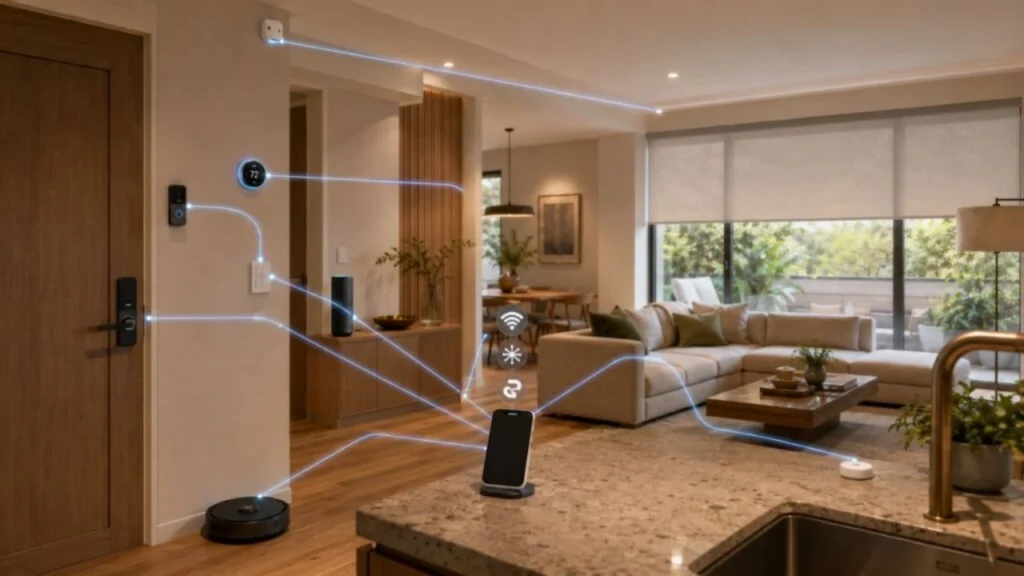
Most smart home devices communicate through a home network. Wi-Fi is common because many homes already have a wireless router. Other devices can use Bluetooth, Zigbee, Z-Wave, or dedicated hubs to communicate.
A typical system may include a smartphone, wireless router, smart hub, and several connected devices. The smartphone provides a control interface, while the network allows devices to exchange information. Some systems also use cloud services to provide remote access and additional features.
The following table shows how common devices can fit into a connected home.
| Device | Main Function | Common Control Method |
|---|---|---|
| Smart bulb | Controls lighting | App, voice, schedule |
| Smart thermostat | Manages temperature | App, sensors, schedule |
| Smart plug | Controls appliances | App, timer, automation |
| Security camera | Monitors areas | App, motion alerts |
| Smart lock | Manages door access | App, keypad, automation |
| Smart speaker | Voice control | Voice commands |
| Smart sensor | Detects activity or conditions | Hub, app, automation |
A well-designed system can connect several devices so they respond to the same event. For example, a motion sensor could trigger a hallway light when someone enters the area.
Smart Lighting for Modern Homes
Lighting is one of the easiest places to introduce smart technology. Smart bulbs and switches can provide remote control, schedules, dimming, and automation. Some systems can also respond to motion sensors or other connected devices.
Automation can also reduce the need to control every light manually. A homeowner can create a schedule that turns outdoor lights on in the evening and switches them off later. Motion sensors can provide another useful layer of automation in hallways, entrances, and other areas.
Smart Thermostats and Energy Management
Temperature control can have a major effect on home energy use. Smart thermostats provide more control than basic manual thermostats because they can use schedules, sensors, occupancy information, and remote access.
The Department of Energy identifies smart thermostats as a smart home technology with demonstrated energy-saving potential. It also explains that these devices can automatically adjust heating and cooling based on whether people are home, away, or asleep.
This makes thermostats an important part of DecoradTech home devices. However, homeowners should not assume that every smart device will automatically reduce energy bills.
Smart Security Devices
Home security is another important area for connected technology. Smart cameras, doorbells, locks, contact sensors, and motion sensors can provide information about activity around the home.
A smart camera may send a notification when it detects movement. A connected doorbell can show visitors through a mobile app. Smart locks can allow homeowners to manage access without carrying a traditional key.
These features can improve convenience, but security devices should also receive regular software and firmware updates. Homeowners should use strong passwords and enable available security features.
Smart Plugs and Connected Appliances
Smart plugs offer a simple way to add automation to some existing appliances. Instead of replacing an appliance, homeowners can connect a compatible device through a smart plug and control its power remotely.
However, not every appliance should be connected to a smart plug. Homeowners should check the plug’s electrical rating and the appliance manufacturer’s instructions before using one. High-power appliances may require different control equipment or professional installation.
Connected appliances can also become part of wider home energy management systems. Research from the Department of Energy shows how smart loads can potentially support energy management and demand response.
Smart Speakers and Voice Control
Smart speakers can act as a convenient control point for compatible home devices. Users can issue voice commands to adjust lights, check certain information, or control supported appliances.
Voice control can be especially useful when someone cannot easily reach a switch or smartphone. It can also help create simple routines for common activities.
Compatibility matters when choosing voice-controlled devices. A product that works with one platform may not offer the same features with another platform.
Smart Sensors and Home Automation
Sensors help smart homes understand what is happening inside or around a property. Motion sensors can detect movement, door sensors can identify an open entrance, and temperature sensors can monitor conditions.
This approach changes smart home technology from simple remote control into automation. Instead of asking a device to perform every task, homeowners can create rules that allow compatible devices to respond automatically.
The Department of Energy describes smart homes as systems where devices such as thermostats, cameras, lighting, plugs, and sensors can work together through connected networks.
Choosing the Right Smart Home Devices
Choosing technology should begin with the problem you want to solve. A homeowner who wants lower heating and cooling use may start with a smart thermostat. Someone concerned about entry monitoring may focus on cameras, sensors, or a smart doorbell.
The table below provides a simple planning guide.
| Home Need | Suitable Device | Main Benefit |
|---|---|---|
| Lighting control | Smart bulbs or switches | Remote and scheduled lighting |
| Temperature control | Smart thermostat | Automated heating and cooling |
| Entry monitoring | Smart lock or door sensor | Easier access management |
| Home monitoring | Security camera | Remote viewing and alerts |
| Appliance control | Smart plug | Remote power control |
| Automation | Smart sensors | Event-based actions |
| Voice control | Smart speaker | Hands-free commands |
Start with one or two useful devices instead of buying everything at once. This approach makes it easier to understand the system and identify compatibility problems before expanding.
Energy Efficiency and Smart Homes
Energy management is becoming an important part of smart home technology. Connected thermostats, smart plugs, sensors, smart appliances, and energy management systems can provide greater control over electricity use.
Some advanced systems can monitor energy use at the circuit or household level. The Department of Energy has researched smart electrical panels that can monitor household loads and help optimize energy use.
Still, smart technology does not guarantee savings. A device can consume electricity itself, and poor settings can reduce the expected benefits. Energy savings depend on how the technology is installed and used.
Privacy and Cybersecurity
Connected homes create another important responsibility: protecting personal information. Cameras, locks, sensors, speakers, and other devices may collect information about activities inside the home.
Avoid using old devices that no longer receive security updates for important functions. Keeping the router and smart devices updated can reduce some common security risks.
The Department of Energy has specifically noted that increasing connectivity can create potential attack paths if cybersecurity practices are not included in system design.
Designing Smart Technology Without Clutter
Technology should fit naturally into the home’s design. Too many visible devices can make rooms feel crowded, especially when cables, hubs, cameras, and control panels appear in many locations.
Homeowners can plan device locations before installation. Wall switches should remain easy to reach, cameras should have suitable viewing areas, and routers should have good network coverage.
Good smart home design combines useful technology with a clean and comfortable living space. The goal is not to make every object look futuristic but to make technology work quietly in the background.
Future of Connected Home Technology
Smart home technology will continue to develop as devices become more connected and automation becomes easier. Future systems may use more advanced sensors, energy management, artificial intelligence, and automated decision-making.
Energy management is especially important because connected buildings can adjust their electricity use based on conditions. The Department of Energy continues to study grid-interactive buildings that can respond to energy needs while supporting efficiency and occupant comfort.
This development could make DecoradTech home devices more useful for homeowners who want greater control over energy, security, comfort, and daily routines.
Final Thoughts
DecoradTech home devices can make everyday home management easier by connecting lighting, security, temperature, appliances, and sensors. Their value comes from solving real problems rather than simply adding more technology.
Homeowners should consider compatibility, security, installation requirements, energy use, privacy, and long-term support before buying connected products. Starting with a small number of useful devices can also make the transition easier.
The best smart home is not necessarily the one with the most devices. It is a home where technology works reliably, supports daily routines, improves convenience, and fits naturally into the living space. With careful planning, connected devices can become a practical part of modern home design.
Pingback: Resilient Roofs for Extreme Weather Areas Guide