
Interior design can change the way a home looks, feels, and works every day. Good design does not depend only on expensive furniture or costly decorations. It starts with smart planning, useful layouts, suitable colors, comfortable furniture, and proper lighting. For homeowners exploring interior design tips for dalandscapingda, the main goal should be to create a space that connects beauty with everyday needs.
Dalandscapingda can be approached as a design concept that brings interior spaces closer to landscaping and outdoor living. This approach helps create a smooth visual relationship between rooms, gardens, patios, balconies, and other outdoor areas.
What Is Dalandscapingda Interior Design?
Dalandscapingda interior design focuses on creating a strong connection between indoor comfort and outdoor surroundings. The idea works well for homes with gardens, patios, balconies, courtyards, or large windows.
Instead of treating the house and landscape as two separate areas, this style considers them part of one living environment. Colors, materials, furniture, lighting, and views can work together to create a balanced appearance. For homeowners looking for more ideas about outdoor spaces, the home decoratoradvice exterior archives can also provide useful inspiration for connecting interior and exterior design.
Start With a Clear Interior Design Plan
The first step in applying interior design tips for dalandscapingda is to create a clear plan. Start by deciding what each room needs to achieve.
Think about how people move through the room and where they normally sit, work, eat, relax, or entertain guests. Measure the room before buying furniture. This simple step can prevent problems with oversized sofas, crowded walkways, and poorly placed tables. You should also consider doors, windows, electrical outlets, natural light, and views toward outdoor areas. These details can influence where you place furniture and lighting.
| Room | Main Purpose | Important Design Needs |
|---|---|---|
| Living Room | Relaxing and socializing | Comfortable seating, lighting, open movement |
| Bedroom | Sleeping and relaxing | Soft colors, storage, privacy |
| Kitchen | Cooking and dining | Easy movement, task lighting, durable surfaces |
| Home Office | Working or studying | Desk space, natural light, storage |
| Patio | Outdoor living | Weather-resistant furniture and lighting |
Planning before shopping can also help control spending. You can decide which pieces need more investment and which items can remain simple.
Choose a Natural and Connected Color Palette
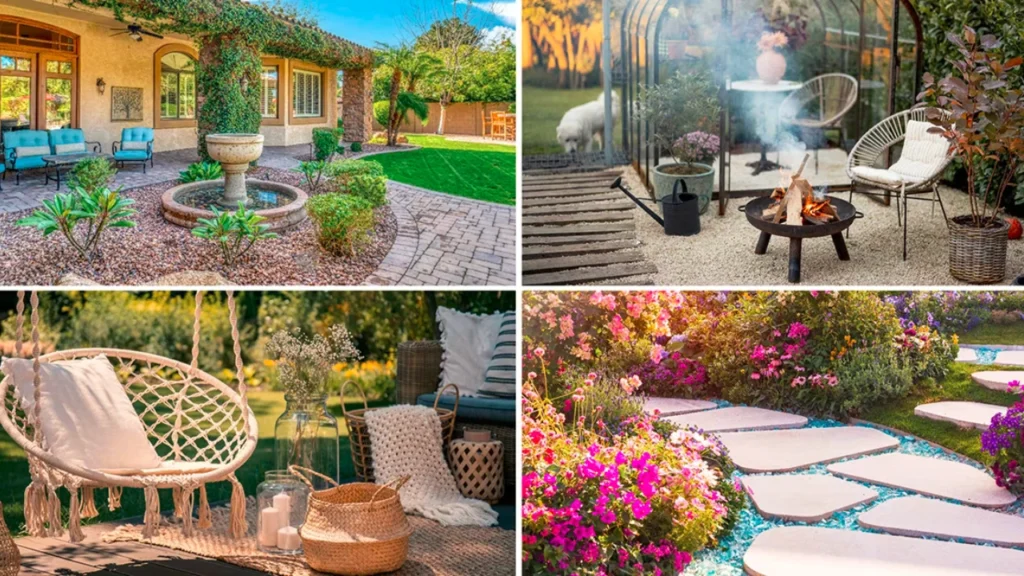
Color plays an important role in creating a connection between interior and exterior areas. A coordinated palette can make rooms feel calmer and more connected.
Natural shades work especially well with a landscaping-inspired design. Soft beige, warm white, muted green, brown, sand, and earthy tones can create a comfortable base. You can then add stronger colors through cushions, artwork, rugs, plants, or small decorative pieces. Current 2026 design discussions also show growing interest in warmer and earthier colors instead of overly cold interiors.
You do not need to use the same color everywhere. Instead, repeat small color details across different spaces. For example, a green shade from the garden could appear in a cushion or piece of wall art inside the home.
Use Natural Materials for a Warm Look
Natural materials can strengthen the relationship between indoor rooms and outdoor spaces. Wood, stone, linen, cotton, ceramic, bamboo, and natural-looking finishes can add warmth and texture.
For interior design tips for dalandscapingda, consider materials that look attractive but can also handle daily use. A busy family home needs surfaces that are easy to clean and furniture that can handle regular activity. You can also repeat related materials in different areas. For example, a wooden dining table can work with wooden outdoor furniture or a wood-toned patio feature.
Matching does not mean everything must look exactly the same. Similar textures and tones can create unity while still allowing each room to have its own personality.
Create a Smart Furniture Layout
Furniture placement affects both appearance and movement. A beautiful sofa will not improve a room if it blocks a doorway or makes movement difficult.
Begin with the largest furniture pieces. Place the sofa, bed, dining table, or main desk first. Then add smaller pieces around them. Keep clear walking routes between important areas. Avoid filling every empty corner with furniture. Empty space can make a room feel calmer and give important furniture more visual importance.
Choose furniture according to room size. A large sofa may work well in a spacious living room, but it can make a small room feel crowded.
Connect Indoor and Outdoor Spaces
One of the most important ideas in interior design tips for dalandscapingda is creating a smooth transition between indoor and outdoor areas.
A patio beside the living room can feel like an additional room when both areas share related colors and materials. Outdoor seating can also repeat the style used indoors. Large glass doors can strengthen the visual connection. If large doors are not possible, carefully placed windows can still frame views of trees, flowers, water features, or other landscape elements.
Think about what people see when they sit inside. A beautiful outdoor focal point can become part of the interior design. The same idea works in reverse. Outdoor areas can use colors and textures inspired by the rooms inside.
Add Plants Without Creating Clutter
Plants can naturally connect interior design with landscaping. They add color, texture, and life to rooms without requiring major structural changes.
Choose plants based on the available light and the amount of care you can provide. A few large plants may create more impact than many tiny pots scattered around the room. Use planters that match the room’s style. Ceramic pots can suit traditional interiors, while simple containers may work better with modern designs.
Place plants where they support the room rather than block movement. Keep walkways, windows, and important furniture areas clear.
Balance Texture, Pattern, and Decoration
A room can feel flat when every surface has the same texture. You can create more visual depth by combining different materials.
For example, combine a smooth wall with a textured rug, soft curtains, wooden furniture, and a ceramic accessory. These differences create interest without requiring excessive decoration. When using patterns, choose designs that share at least one color with the rest of the room. This keeps the overall appearance organized.
Design experts often describe balance, rhythm, emphasis, proportion, scale, and harmony as important foundations of interior design.
Choose Furniture Based on Scale
Scale and proportion can make the difference between a comfortable room and an awkward one. Furniture should relate to the size of the room and to nearby objects.
A small coffee table can look lost beside a large sofa. A tiny rug can also make a large seating area feel disconnected. Measure before buying. Leave enough space around furniture for comfortable movement. Make sure doors, drawers, and cabinets can open without hitting other objects.
This approach helps prevent unnecessary purchases and makes the room easier to use.
Keep Storage Practical and Attractive
Storage is an important part of good interior design. Too many visible objects can make even a beautiful room look messy.
Use cabinets, shelves, storage benches, baskets, and built-in units to keep everyday items organized. Closed storage works well for objects that you do not want on display. Open shelves can hold books, plants, photographs, or carefully selected decorations. Avoid filling every shelf because negative space can improve visual balance.
For interior design tips for dalandscapingda, storage should support the relationship between indoor and outdoor living. A cabinet near a patio door, for example, can hold cushions, gardening items, or outdoor accessories.
Design Small Spaces With Purpose
Small rooms need careful planning. Avoid choosing furniture simply because it looks attractive in a store.
Use pieces that match the room’s actual dimensions. Wall-mounted shelves can save floor space, while mirrors can help reflect light and make a room feel more open. Light colors can also support an airy appearance, although small rooms do not always need to stay completely neutral. A carefully selected darker wall or accent can add personality.
Keep the floor as open as possible. Too many objects near the floor can make the room feel crowded.
Avoid Common Interior Design Mistakes
Even simple projects can become difficult when homeowners skip planning. One common mistake involves buying furniture before measuring the room.
Another problem occurs when people use too many unrelated colors. A room can quickly lose visual unity when every item has a different style. Poor lighting also affects the final result. A room may look attractive during the day but feel uncomfortable at night if it lacks suitable lighting.
Avoid following every trend at once. Choose designs that support your lifestyle and can remain useful for several years. Current design advice increasingly favors personal, functional, and layered spaces over interiors built around one short-lived trend.
How to Apply Dalandscapingda Ideas on a Budget?
You do not need a large budget to improve your home. Start with the changes that create the biggest practical difference.
Rearranging furniture can improve movement without costing anything. New cushions, curtains, rugs, plants, or artwork can refresh a room without replacing major furniture. Paint can also change the atmosphere of a space. Choose a color that works with existing furniture and nearby outdoor areas.
If you have a garden or balcony, improve the view from the rooms that people use most. Even small landscape improvements can make the interior feel more connected to nature.
A Simple Design Checklist
Before completing an interior project, review the main elements of the space. Check whether furniture supports movement and whether the color palette feels connected.
Make sure the lighting works during both daytime and nighttime. Check whether storage keeps everyday items organized. Look at the room from different positions. Pay attention to what you see when entering the room, sitting on the sofa, or looking through a window.
| Design Element | What to Check |
|---|---|
| Layout | Clear movement and useful furniture placement |
| Color | Balanced and connected shades |
| Lighting | Ambient, task, and accent lighting |
| Materials | Durable and visually related finishes |
| Furniture | Correct scale and comfortable use |
| Storage | Enough space for everyday items |
| Plants | Suitable size and light requirements |
| Outdoor View | Attractive and intentional sightlines |
Final Thoughts
Good interior design begins with understanding how a home should work. Once the layout, lighting, storage, colors, and furniture are planned, decoration becomes much easier.
The main idea behind interior design tips for dalandscapingda is to create harmony between indoor comfort and outdoor beauty. Natural materials, coordinated colors, useful furniture, plants, and carefully planned views can help connect the two environments.
You do not need to copy a particular trend to create a beautiful home. Focus on practical needs, personal style, comfort, and long-term use.
Pingback: Bet9ja Household DecoratorAdvice Name and Its Popularity